
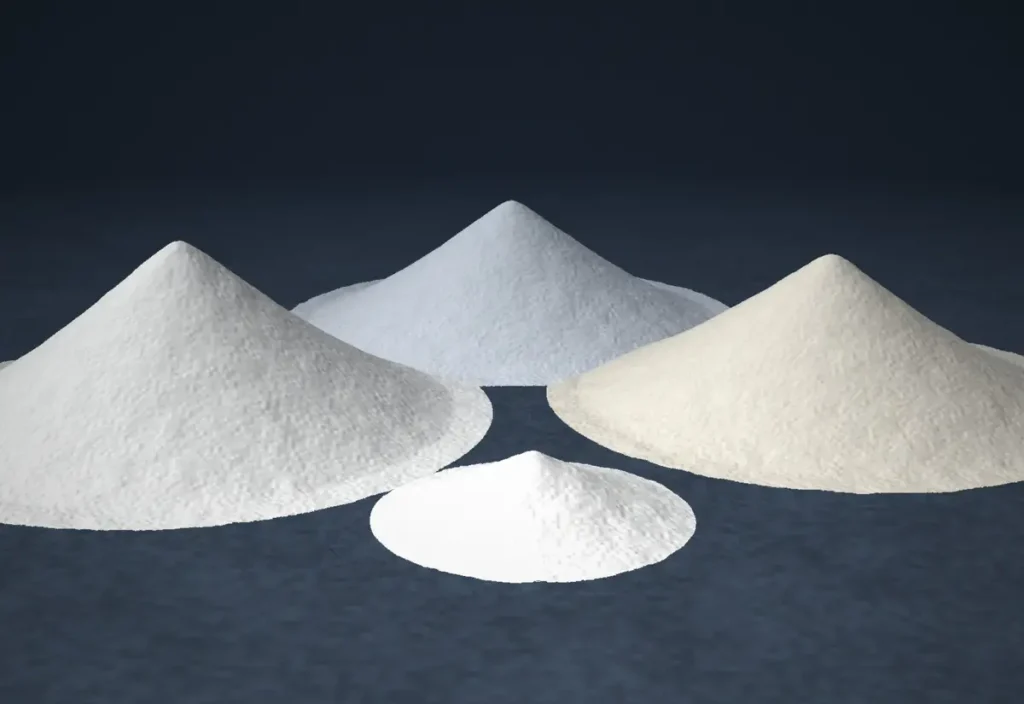
Hydrated lime is one of the plainest-looking products we supply – a white powder in a 50 Kg bag. Yet it shows up in more industries than almost anything else, because it does one job extremely well: it raises pH cheaply.
What it is
Hydrated lime powder (calcium hydroxide) is made by adding water to quicklime. It is easier and safer to handle than quicklime, and it mixes into water as milk of lime.
Main uses
Water treatment
- Raises pH of acidic raw water.
- Helps remove hardness in lime-soda softening.
- Supports coagulation with alum or PAC.
Effluent treatment
Acidic effluent from textile, chemical and paper units is neutralised with lime before biological treatment. Lime also helps precipitate metals and phosphates. See our ETP chemicals.
Sugar industry
In sugar mills, lime is central to juice clarification: it raises pH, prevents sucrose loss and helps impurities settle.
Paper and pulp
Mills use lime for pH correction, in causticising, and to treat white water and effluent.
Construction and others
Mortar, plaster and soil stabilisation – but industrial grades for process use need tighter quality.
Quality points that matter
- Available lime content – higher means less lime for the same effect.
- Fineness – finer powder reacts faster and makes smoother milk of lime.
- Grit and insolubles – cause wear and sludge.
- Moisture – damp lime cakes in the bag and hopper.
Benefits
- Low cost per unit of alkalinity.
- Safe compared with caustic soda.
- Also helps settling and sludge formation.
Safe handling
- Lime is alkaline – use gloves, goggles and a dust mask.
- Store bags dry and off the floor; moisture spoils it.
- Mix milk of lime in a stirred tank and keep it agitated so it does not settle.
Use cases
- Water treatment plants.
- Sugar mills during crushing season.
- Paper & pulp mills.
- Chemical and textile effluent plants.
Need steady lime supply for the season? Tell us your monthly quantity and use – we will quote for 50 Kg bags or bulk. Request a quote →