
Walk into the finishing house of almost any writing-printing mill and pick up a sheet from two different reels. If one looks a shade greyer, shows more print-through or feels slightly rougher, there is a good chance the difference started at the filler – and very often, the china clay.
We have supplied china clay to paper mills in western U.P. since 1988, and the questions we hear have not changed much in that time. Why did opacity drop on this batch? Why is the machine dusting more? Can we cut fibre cost without hurting strength? This note answers those questions in plain terms, for the people who actually run the machine.
What china clay actually does in paper
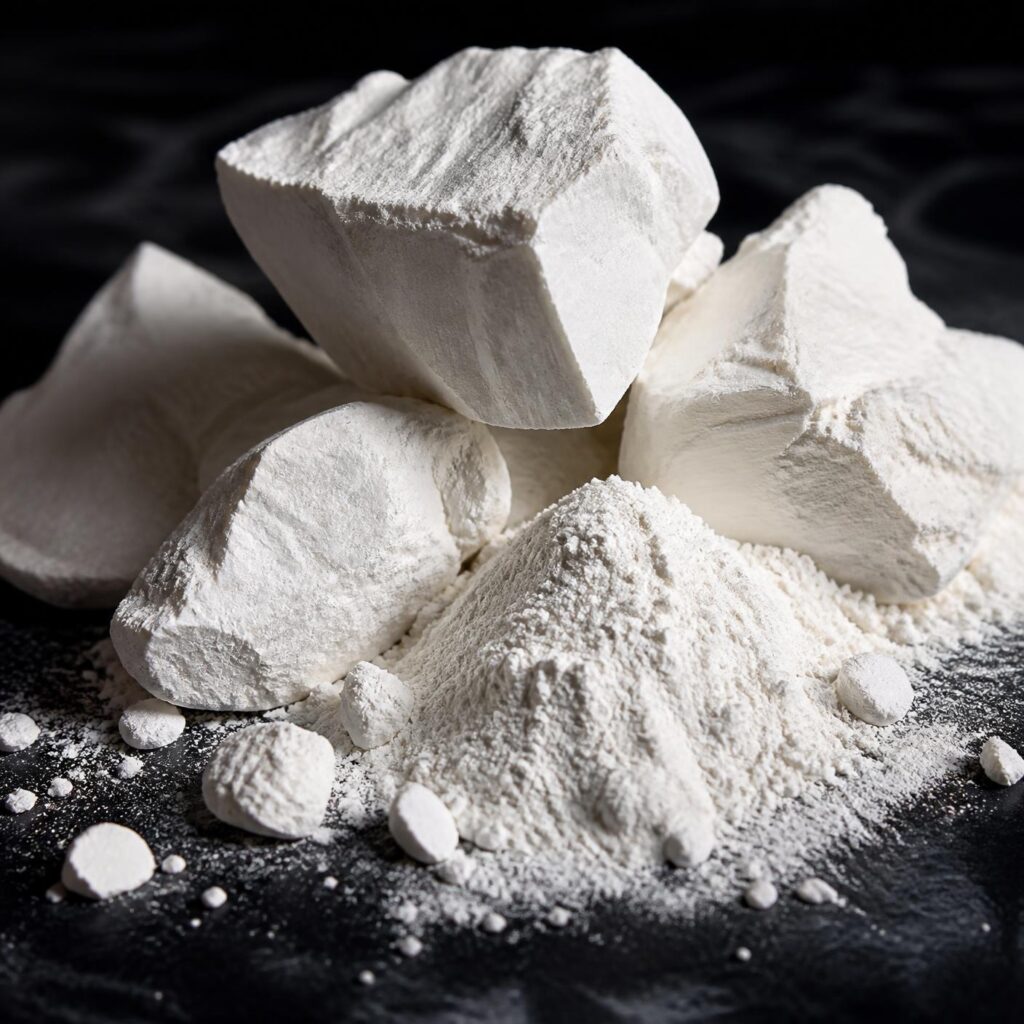
China clay (kaolin) is a fine, white mineral made mostly of kaolinite. Its particles are thin, flat plates. That shape is the whole reason it works so well in paper: the plates lie flat between fibres and on the sheet surface, filling gaps and scattering light.
In a mill it is used in two ways:
- As a filler – added at the wet end, where it sits between fibres inside the sheet.
- As a coating pigment – applied on the surface of the board or paper, usually with a binder, to give a smooth, bright, printable face.
The same mineral, but the grade you need for each job is very different. More on that below.
Five benefits mills notice first
1. Better opacity
Clay particles scatter light inside the sheet, so less print shows through from the back. For thin writing and printing papers, this is often the main reason clay is used at all.
2. A smoother, more even surface
Flat plates fill the valleys between fibres. The sheet feels smoother, calenders more evenly and takes ink with less mottle.
3. Improved printability
A closed, uniform surface holds ink on top instead of letting it sink in. Printers see sharper dots and better colour – one of the first things a converter will comment on.
4. Lower furnish cost
Good-quality clay costs less than fibre. Replacing part of the furnish with filler, within the limits your strength targets allow, brings down the cost per tonne of paper.
5. Brighter coated board
On duplex and coated board, a coating clay layer gives the white, print-ready top that carton buyers expect – without needing more expensive pigments for the whole coat.
Filler clay vs coating clay: choosing the right grade
This is where most problems start. A clay that runs perfectly as a filler can give a poor coat, and the reverse is also true. When you compare grades, look at:
- Brightness – sets the shade of the finished sheet. Coating grades need more.
- Particle size – finer clay gives better gloss and smoothness in coating; filler grades can be coarser.
- Grit / residue – coarse particles cause wear on wires and blades, and specks in the sheet.
- Moisture and form – powder, lumps or slurry, depending on how your plant makes down the clay.
- Consistency between lots – honestly the most important point. A slightly lower spec that never changes is easier to run than a high spec that drifts.
At Mittal Trading Company we stock clay in the grades mills actually run:
- China Clay (Fillers) – a steady, cost-effective filler for writing-printing, kraft and duplex grades.
- Kaolite-90 – a coating grade developed as a dependable Indian alternative to imported Kaofine-90.
- KCC Fines (Kaoline Clay) – our premium coating grade for board makers who need a brighter, smoother top coat.
- Coating Clay (Powder / Lumps) – for mills that prefer to make down from lumps.
Where each grade fits: real use cases
- Writing & printing paper: filler clay for opacity and formation, often blended with calcite powder or GCC for brightness.
- Duplex board: coating clay in the top coat for whiteness and print quality on cartons.
- Kraft and packaging grades: lower clay levels as filler to improve surface and printability on outer liners.
- Ceramics: the same mineral family is used in ceramic bodies and glazes, where whiteness and plasticity matter.
Common problems – and what usually fixes them
Low filler retention
If clay is draining away with the white water, ash in the sheet drops and costs go up. Check your retention programme first. A suitable cationic starch and retention aid often recover more clay than changing the clay itself.
Dusting and linting
Too much loosely bound filler on the surface will dust in the press room. Balance filler level with surface sizing and strength additives.
Shade changes between batches
Nine times out of ten this is a lot-to-lot change in the clay, not your process. Ask your supplier how they keep grades consistent – and keep a sample of every lot.
Blade scratches or wire wear
Usually caused by grit. A coating grade with low residue avoids most of it.
A quick checklist before you change clay grade
- Run a small trial on one machine before switching fully.
- Compare brightness, ash and opacity against your current grade, not against a datasheet.
- Check how the clay makes down in your own pulper or disperser.
- Agree packing (50 Kg bags or bulk) and lead time before the first order.
- Keep retained samples from every lot.
Frequently asked questions
Is Indian china clay good enough for coating?
Yes, when it is processed well. Kaolite-90 is used by mills as an alternative to imported grades, at a lower landed cost and with shorter lead times.
How much clay can I add as filler?
It depends on the grade of paper and your strength targets. Most mills increase filler step by step while watching tensile and bursting strength.
In what packing do you supply china clay?
Usually 50 Kg bags; jumbo bags and bulk are possible for regular volumes.
Can I get a sample before ordering?
Yes. Tell us your paper grade and current clay, and we will suggest a grade and arrange a trial quantity.
Need a steady china clay supply? Tell us your grade, monthly quantity and delivery location – our team will suggest the right clay and send a quotation. Request a quote →