
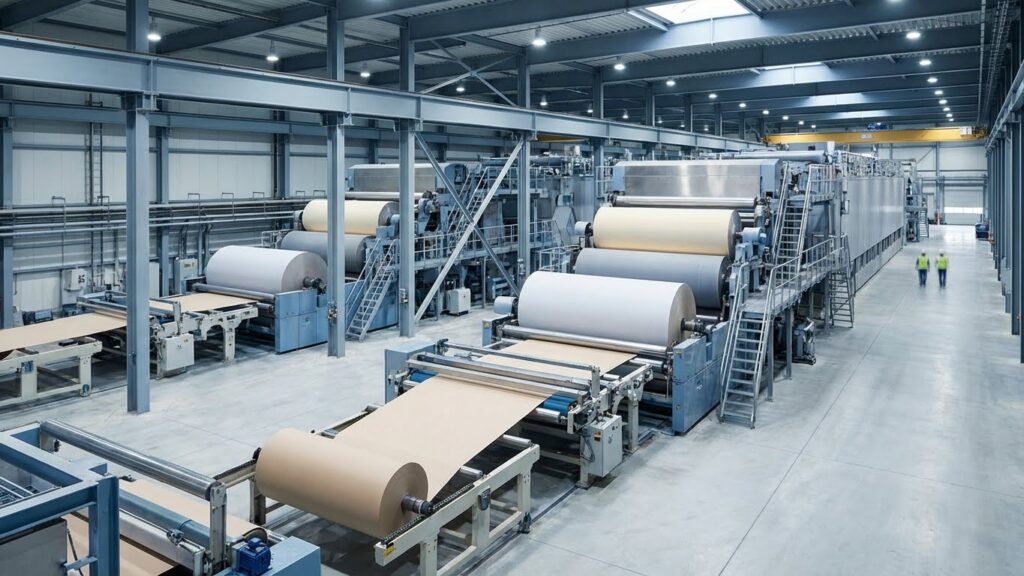
Alum has been on paper machines for over a century, and it is still one of the most used chemicals in mills running rosin sizing. It is cheap, it does several jobs at once, and when it is dosed badly it causes some of the most stubborn problems on the machine.
What alum does
Alum (aluminium sulphate) is a multi-purpose wet-end chemical:
- Fixes rosin size onto fibres so the sheet resists water and ink.
- Controls pH in acidic papermaking.
- Helps retention by neutralising negative charges on fines and fillers.
- Fixes dyes so colour stays in the sheet instead of the white water.
- Coagulates pitch and anionic trash, especially with recycled fibre.
Ferric vs non-ferric alum
Ferric alum
Ferric alum contains a small amount of iron. It works well and costs less, which makes it popular for kraft, duplex back layers and other unbleached or coloured grades where a slight tint does not matter. It is also widely used in effluent and water treatment.
Non-ferric alum
Non-ferric alum has very low iron. Iron can dull brightness and shift shades, so non-ferric alum is the choice for white writing and printing papers, tissue and light-coloured grades.
Simple rule: if brightness or a clean shade matters, use non-ferric. If cost matters more and the grade is brown or dark, ferric is usually fine.
How much to add
There is no single number – it depends on your rosin dose, water hardness and pH target. Most mills dose alum in proportion to rosin and then trim to hold pH steady at the headbox. Keep a log; sudden jumps in alum demand usually mean something upstream has changed.
Problems caused by alum – and fixes
Sticky deposits
Too much alum, or alum meeting rosin in the wrong place, forms deposits on felts, wires and press rolls. Balance the alum-to-rosin ratio and dose them at separate points with good mixing.
Drop in brightness
Iron from ferric alum or from process water. Switch to non-ferric alum for white grades.
Corrosion and low pH
Overdosing pushes pH too low and attacks equipment. Monitor pH continuously.
Poor sizing in summer
Warm white water and higher pH reduce rosin efficiency. Re-check alum dose when season or furnish changes.
Use cases
- Rosin-sized kraft paper and liners.
- Writing & printing papers (non-ferric).
- Duplex board back and filler layers.
- Coagulation in ETPs and sugar juice clarification.
Buying tips
- Ask for consistent alumina and iron content lot after lot.
- Agree on form – lumps, powder or liquid – based on your make-down system.
- 50 Kg bags are standard for solid alum.
Need ferric or non-ferric alum? Tell us your grade and monthly quantity – we will suggest the right type and send a quotation. Get a quote →