
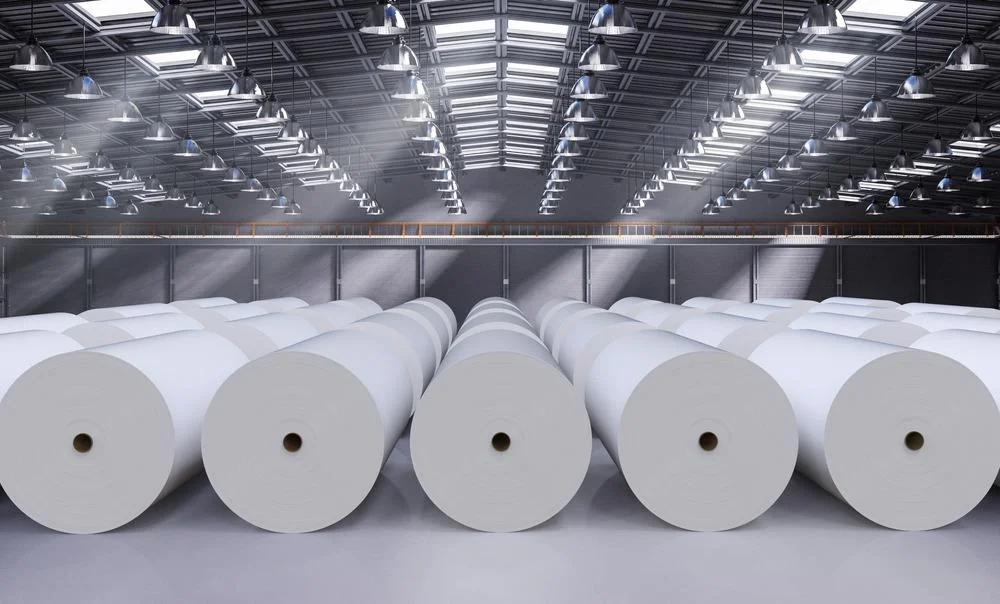
Two sheets with the same brightness on the meter can look very different to a customer’s eye. The one with an optical whitening agent looks cleaner and “whiter.” For writing, printing and tissue grades, that visual difference sells paper.
How it works
An optical whitening agent (OBA, also called optical brightener) absorbs invisible ultraviolet light and gives it back as blue light. This blue cancels the natural yellow tint of pulp, so the sheet looks bright white in daylight.
Where to add it
- Wet end: gives whiteness through the whole sheet. Add to thick stock with good mixing, away from strong cationic additives that can quench it.
- Size press: puts the agent on the surface, where it does the most visible work. Often more efficient per kilo.
- Coating: for coated grades, OBA in the coating colour lifts whiteness of the top layer.
Benefits
- Whiter-looking paper without expensive extra bleaching.
- Lets mills use lower-brightness pulp or recycled fibre.
- Better shelf appeal for writing paper, notebooks and tissue.
Getting more from every kilo
- Avoid overdosing – beyond a point, the sheet turns greenish (“greening”) and whiteness drops.
- Watch cationic chemicals and alum near the dosing point – they can reduce OBA effect.
- Use filler and pulp with good base brightness – OBA cannot fix a grey sheet.
- Check whiteness under the same UV-containing light every time.
Use cases
- Writing and printing papers and notebooks.
- Tissue and napkins.
- Top layers of duplex board.
- Textile and detergent products, where optical brighteners make whites look whiter.
Want whiter paper at lower cost? Tell us your grade and current brightness – we will suggest an OBA and dosing point. Ask about whitening agents →