
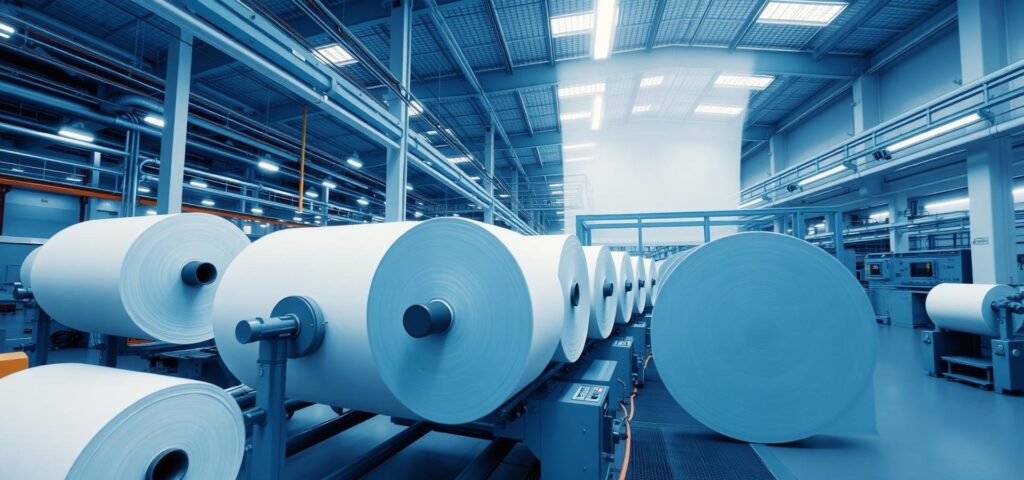
Tissue is a tricky product. Customers want it soft, strong enough not to tear in use, and quick to absorb – but most changes that improve one of these hurt another. The right chemistry is how tissue mills find the balance.
The three targets
- Softness – how it feels in the hand.
- Strength – dry strength for converting, wet strength for kitchen towels and napkins.
- Absorbency – how fast and how much water it takes up.
Chemicals that help
Wet strength resins
For towels and napkins that must not fall apart when wet, melamine formaldehyde and urea formaldehyde resins add wet strength. Pidifix 361 MF resin is used by many mills for this.
Starch for dry strength
A low dose of cationic starch adds dry strength without making the sheet harsh.
Enzymes
Enzymes can refine fibre more gently, improving strength while keeping bulk and softness.
Clean water system
Tissue machines run fast with very light sheets – any slime or foam shows up as holes. An antislime agent and a suitable defoamer keep the system clean.
Brightness and colour
An optical whitening agent lifts whiteness; pastel shades use small amounts of paper dyes.
Common issues
- Too harsh: strength chemicals overdosed – reduce and rely more on refining balance.
- Poor wet strength: check pH and curing; wet strength resins need time and heat to develop.
- Slow absorbency: sizing contamination from broke or recycled fibre.
- Holes and spots: slime or foam – clean the system.
Use cases
- Tissue mills making toilet rolls, facial tissue, napkins and kitchen towels.
- Converters who need consistent parent reels.
Running a tissue machine? Tell us your product and the balance you are trying to hit – we will suggest a chemical programme. Ask our team →