
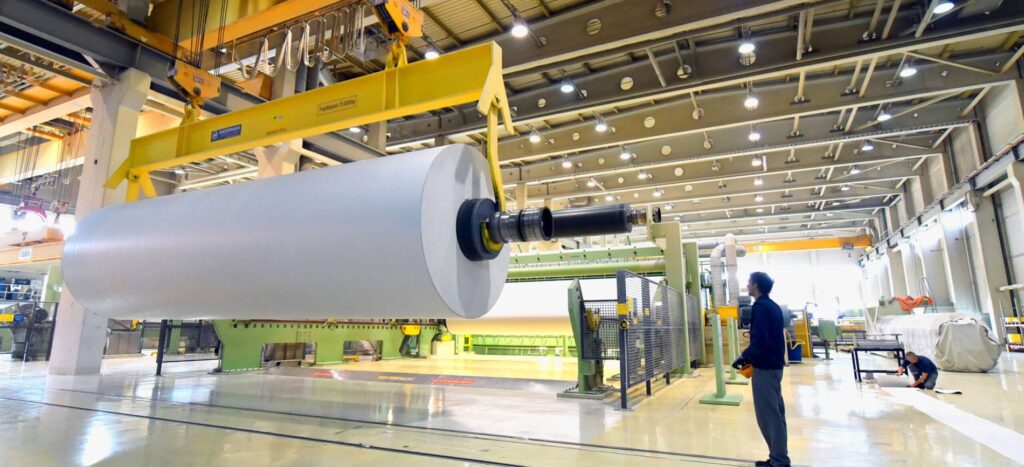
After the wire, the press section removes more water than any other part of the machine before the dryers. Every extra point of dryness leaving the press saves steam – and the press felt does most of that work. When felts fill up or wear out early, steam goes up, speed comes down and money leaks out.
What a press felt does
A felt carries the wet sheet through the press nips, absorbs water squeezed from it and carries that water away to the suction boxes. It must stay open (porous), smooth enough not to mark the sheet, and strong enough to survive millions of nip passes.
Why felts fail early
- Filling – fines, filler, pitch and stickies plug the felt, so it cannot take water.
- Compaction – the felt flattens and loses void volume over time.
- Wear – poor conditioning, worn doctor blades or dry running.
- Chemical attack – wrong cleaning chemicals or extreme pH.
- Wrong design – a felt that does not match the machine speed, load or grade.
Steps that add days to every felt
- Keep showers working – blocked nozzles mean dirty felts.
- Check Uhle box vacuum and dwell time regularly.
- Control fines and stickies upstream with good retention and stickies control.
- Use proper felt cleaning chemicals, not just more water.
- Break in new felts gently – avoid full load on the first day.
Choosing the right felt
We supply endless felts from Daehan Endless Felt Co., Korea – one of the established names in paper machine clothing. The right design depends on:
- Machine type, speed and nip load.
- Grade and basis weight – kraft, duplex, writing or tissue.
- Position – first, second or third press.
- Your current felt life and failure pattern.
Related machine clothing
- Dryer screens and spiral link dryer fabric for the dryer section.
- Corrugated belts and conveyor belts for converting lines.
Changing felts too often? Share your machine details and current felt life – we will recommend a Daehan felt design and quotation. Ask about felts →