
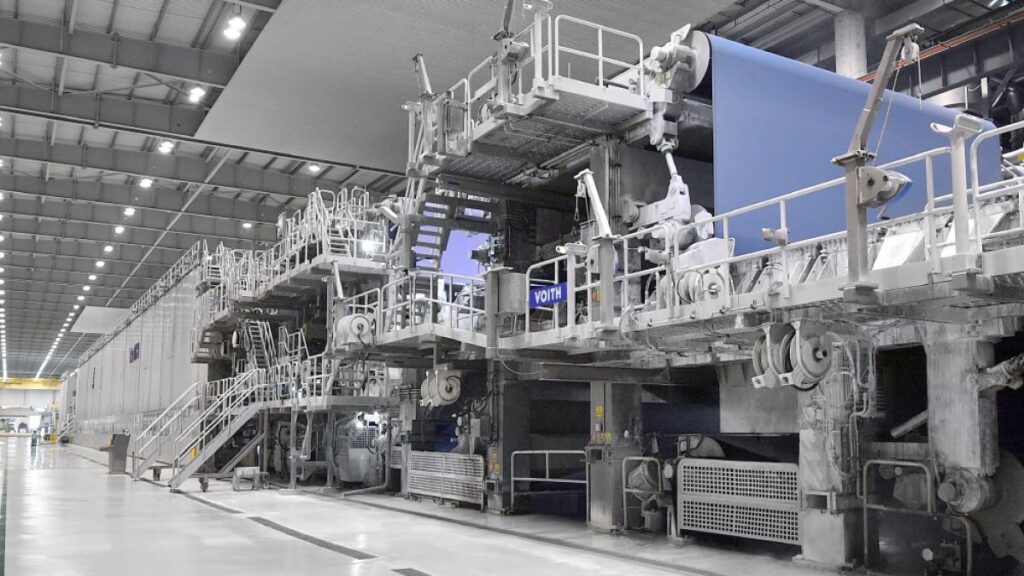
The dryer section uses most of a paper mill’s steam. The dryer screen (dryer fabric) holds the sheet against hot cylinders and lets vapour escape. A screen that is too tight, too open or worn out quietly costs steam and speed.
What a dryer screen does
- Presses the sheet onto the cylinders for good heat transfer.
- Supports the sheet between cylinders to prevent flutter and breaks.
- Lets moisture escape from the pocket ventilation.
- Survives high temperature and humidity for months.
Woven vs spiral link
Woven dryer screens
Traditional dryer screens are woven from heat-resistant monofilaments and joined with a seam. They come in many designs and permeabilities and suit most conventional machines.
Spiral link dryer fabric (SLDF)
Spiral link dryer fabric is made from interlocking spirals. It is very stable, easy to install, can be joined anywhere along its length and is easy to repair. Many mills choose it for long life and simple installation on older machines.
What to check before ordering
- Permeability – match to speed and pocket ventilation. Too open causes sheet flutter; too closed traps moisture.
- Exact size – length and width under tension, as specified by the machine.
- Temperature and chemistry – some positions need hydrolysis-resistant materials.
- Seam type – pin seam, spiral seam or endless, depending on installation.
- Expected life – and the cost per tonne of paper produced, not just the price per screen.
Signs a screen needs replacement
- Rising steam consumption for the same output.
- Uneven moisture profile across the reel.
- Sheet flutter or breaks in the dryer section.
- Visible wear, holes or seam damage.
Use cases
- Kraft, duplex and writing paper machines.
- Corrugated box plants use corrugated belts on similar principles.
Planning your next screen change? Send us the machine position, size and current screen – we will suggest the right fabric and quote. Request a quote →