
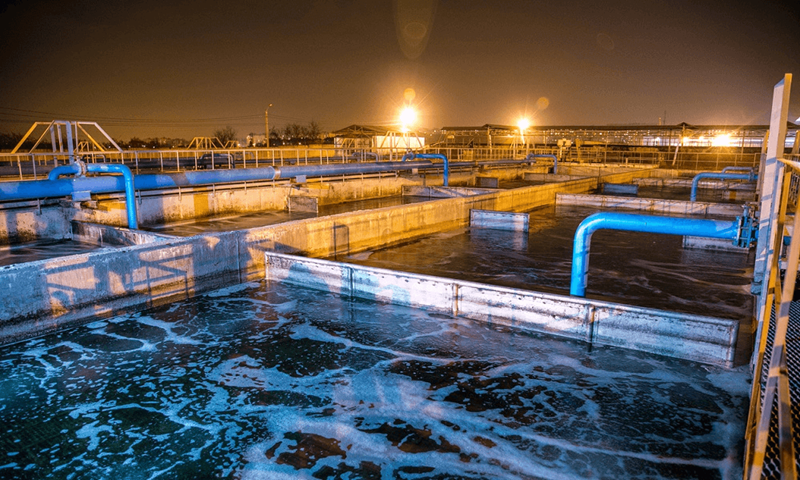
An effluent treatment plant (ETP) is not optional any more – pollution control boards check outlet parameters, and a failed sample can mean notices or closure. The good news is that most ETPs can meet their limits with the right chemicals, dosed correctly.
The basic stages and their chemicals
1. pH correction
Raw effluent is often too acidic or alkaline for treatment. Hydrated lime powder or acid brings it into range.
2. Coagulation
Coagulants neutralise the charge on fine suspended particles so they can stick together. Common choices are PAC (poly aluminium chloride), ferric alum and non-ferric alum.
3. Flocculation
A flocculant – a long-chain polymer – binds the small particles into large flocs that settle quickly in the clarifier.
4. Biological treatment
Aeration tanks use bacteria to break down dissolved organics (BOD and COD). Nutrients and good aeration keep them healthy.
5. Sludge handling
Flocs settle as sludge, which is thickened and dewatered.
Our ETP range
Our ETP chemicals cover coagulants, flocculants and pH correction for most common effluents.
Benefits of a well-run ETP
- Outlet values within pollution control limits.
- Clearer treated water that can be partly reused.
- Less sludge volume and lower disposal cost.
- Fewer odour complaints.
Use cases
- Paper & pulp mills – suspended solids and COD.
- Textile dyeing units – colour and COD.
- Sugar and chemical plants.
- Soap & detergent units.
Tips that make a big difference
- Do a jar test before changing chemicals – it costs nothing and saves a lot.
- Dose coagulant before flocculant, with proper mixing for each.
- Make down flocculant at the right strength and let it age.
- Keep a daily log of dose, inlet and outlet values.
Struggling to meet ETP limits? Send us your effluent analysis and plant details – we will suggest chemicals and dosages. Get ETP help →